An unprecedented number of young people took part in the UN climate conference in Antalya, Türkiye, this year. Rather than presenting themselves merely as victims of climate change, they stepped forward as policymakers, innovators and frontline advocates. By Sohanur Rahman, Climate Justice Advocate
.
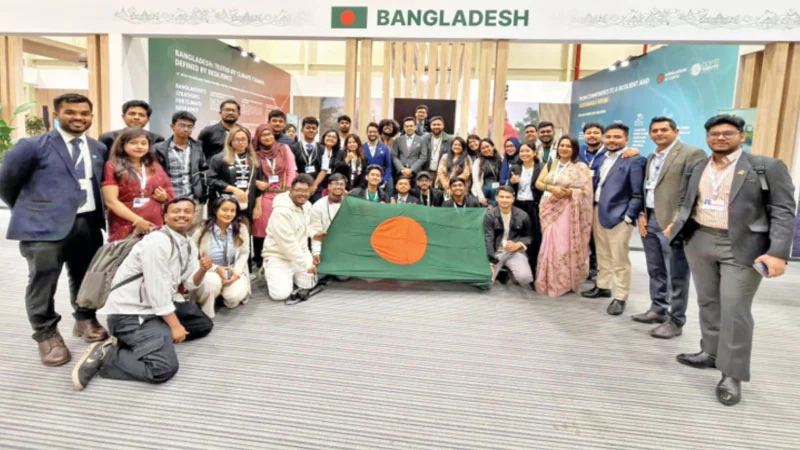
Young people were involved in preparing Bangladesh’s position paper even before COP31 began. I worked alongside Amanullah Parag, founder of Youth for NDC, as part of the government’s technical subcommittee. Young people also played a leading role in designing and organising Bangladesh’s pavilion under the leadership of Shah Rafayet Chowdhury of Footsteps. The pavilion received considerable international attention.
Before COP31, young people from all 64 districts contributed to a youth climate position paper. Their priorities included ensuring local communities have authority in adaptation decisions, securing finance for addressing loss and damage, and strengthening youth participation in policymaking.
The position paper was submitted to the Ministry of Environment, Forest and Climate Change following Bangladesh Youth COP, organised in September by ActionAid Bangladesh and Brighters.
In October, Bangladesh hosted the first-ever Asia-Pacific Youth COP, led by SEECTO Bangladesh, a youth-led climate and environmental organisation. Young representatives from 28 countries presented a joint statement. Farzana Faruk Jhumur, a member of the UN Secretary-General’s Youth Advisory Group on Climate Change, was involved in the discussions from the preparatory stage.
From Negotiation Simulations to COP Discussions
COP31 began on November 9, 2026, and was originally scheduled to conclude on November 20.
With support from UNICEF Bangladesh, Youth for NDC sent seven participants from its Youth Climate Negotiators Fellowship to the summit. Five of them joined the official government delegation.
During a residential training programme in July, the fellows took part in negotiation simulations to prepare for the summit.
Parag followed discussions on reviewing progress towards the goals of the Paris Agreement, implementing national climate commitments and unilateral trade measures. Tahmid Zarif focused on climate finance, Samia Mehjabin Sneha on adaptation, Shabil Ahmed on the Loss and Damage Fund, and Kashfia Kaswar Chowdhury on emissions reduction.
At the Finland Pavilion, Sneha also joined a discussion on the role of businesses in protecting children’s interests in the green economy.
First-Time COP Experiences
Khairul Islam Munna from Betagi in Barguna was a child when Cyclone Sidr struck. At his first COP, he aimed to bring the experiences of coastal communities into discussions on loss and damage.
For Mamunur Reza from the Barind region of Naogaon, Jannatul Naim from Satkhira, Juthishthir Chandra Biswas from UKAN in Habiganj, and Rifat from Shariatpur, COP31 was also their first climate summit.
The Chittagong Hill Tracts were represented by Lily Prue Marma and Tawhid from Bandarban.
Young participants attended negotiating sessions, organised dialogues and took leading roles in protests and strike actions. Jimran from Cox’s Bazar highlighted the importance of zero-waste initiatives.
According to Saidur Rahman Siam of the Brighters Foundation, newcomers to the COP process learn how to build support from other countries for their demands.
Bangladesh’s Five Proposals
On November 12, Bangladesh’s Prime Minister Tarique Rahman presented five proposals at the high-level segment of COP31.
The first called for at least half of international climate finance to be allocated to adaptation, based on countries’ national priorities, while also providing support for emissions reduction.
The second proposed extending debt repayment deadlines following disasters and reducing debt burdens in exchange for investment in climate projects.
The third called for fair access to climate-friendly technologies and support for technology transfer to developing countries.
The fourth focused on accelerating a just transition to renewable energy through affordable finance and skills development.
The fifth proposed adopting the Belém–Antalya Action Mechanism based on fair finance and trade.
He also called for the creation of decent green jobs, keeping global warming within the 1.5°C limit, and ensuring women’s and young people’s participation in climate initiatives.
Young People’s Demands to World Leaders
At a reception hosted by the Dutch Ministry of Foreign Affairs, young leaders presented their priorities to world leaders. Climate-induced displacement was among the issues raised during the discussions.
Students from Pacific island nations had previously campaigned for an advisory opinion from the International Court of Justice to clarify states’ legal obligations in addressing climate change.
Voices of Children from Coastal Areas and River Islands
Two students from river island communities, or chars, in Kurigram Jannati Khatun and Md Rasel Babu attended the summit through Friendship.
Nawshin Islam, a ninth-grade student from Pratappur in Ashashuni, Satkhira, also joined the conference. As president of the Coastal Children’s Forum, she highlighted how climate change affects children’s everyday lives.
“Climate change disrupts our education, creates food shortages and increases child marriage,” Nawshin said.
Who Should Bear the Responsibility for Collecting Water?
At the Global Futures Pavilion, I presented preliminary findings from research by icddr,b and Imperial College London on drinking water salinity and cardiovascular health risks in Koyra and Ashashuni.
The discussion generated proposals for testing salinity at water sources and expanding services at health centres.
But one question remained: when nearby water sources become saline, who should bear the additional time and burden of collecting drinking water from distant places?
During a conversation with Tuvalu’s Prime Minister Feleti Teo, I also raised the role of men and adolescent boys in ensuring a just transition.
Planning to Attend a Future COP?
Young people interested in attending future climate summits can begin by building networks with like-minded organisations through Youth COPs and workshops.
Following youth organisations and fellowship organisers on LinkedIn can help identify opportunities. Those seeking access to the Blue Zone should explore nomination and registration opportunities through official government delegations or accredited observer organisations.
When applying for travel scholarships, applicants should clearly outline transportation and accommodation costs. They should also explain which negotiations they intend to follow, why those discussions matter to their communities, and with whom they plan to share their experiences after returning home.
What Young People Expect After the Summit
At the Bangladesh Pavilion, we called on the government to make domestic and international funding more accessible to youth organisations and reduce VAT and tax burdens.
We also urged donors to introduce simpler application procedures and provide direct funding to youth-led organisations.
Young people from all 64 districts should be able to track what happens to their proposals. Publishing which recommendations are accepted, which government agencies are assigned responsibility and how much funding is allocated would help them monitor progress and hold institutions accountable.
Bangladesh’s young people are ready. At Antalya, young representatives gained valuable experience in climate negotiations. I hope that, before the next COP, they will have greater opportunities and adequate support to take action in their own communities.
Then, I hope to hear directly from young people like Nawshin about which initiatives have been most effective in helping their classmates return to school after disasters.