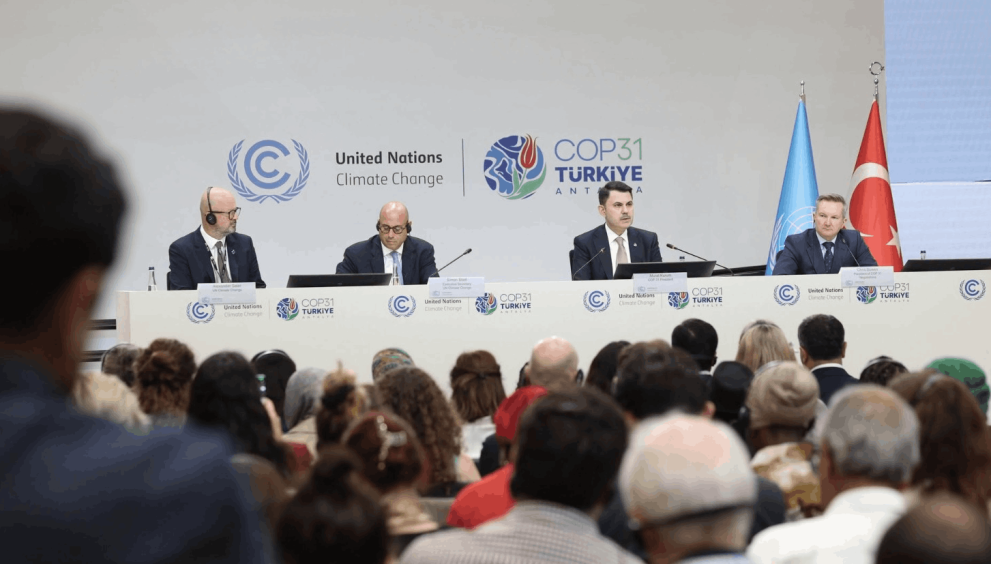
The COP31 Presidency has launched a series of initiatives to strengthen ocean protection, restore coastal ecosystems and expand access to blue finance, bringing oceans and nature to the centre of global climate action.
The initiatives include the Antalya Ocean and Seas Compact, a regional cooperation programme for oceans and seas, and the Marine Litter Action Platform. They aim to strengthen ocean-related policies in national climate plans, improve coastal resilience and connect marine conservation projects with technical support and financing.
The Antalya Ocean and Seas Compact encourages countries to integrate ocean-related emissions reduction and adaptation measures into their national climate plans. It also recognises that only a small share of global climate finance reaches ocean-related priorities and calls for improved access to blue finance through initiatives such as BRIDGE.
A regional and international cooperation initiative has set targets for 2035, including restoring at least 20% of priority degraded coastlines, promoting clean marine energy and green ports, increasing climate-resilient investment in shipping and tourism, and expanding early warning systems for vulnerable coastal communities.
The Marine Litter Action Platform was also presented internationally. Drawing on Türkiye’s Zero Waste experience, it aims to connect successful marine waste management solutions with technical expertise, knowledge-sharing and financing.
Türkiye and Australia are working together to expand financing opportunities for ocean and coastal projects, particularly in small island developing states. Scientists and policymakers have also discussed Antarctica’s role in the global climate system.
Another initiative, the Rio Synergies Group for Action, will help countries coordinate priorities under the three Rio Conventions on climate change, biodiversity and land. The voluntary initiative does not introduce new commitments or mandatory reporting requirements.
Meanwhile, Türkiye and Germany’s International Climate Initiative (IKI) have announced a major grant call to support energy efficiency and circular economy transitions in the buildings sector.
What Bangladesh needs to do
The initiatives offer significant opportunities for Bangladesh, particularly in protecting the Bay of Bengal, coastal communities and marine ecosystems.
Bangladesh needs to strengthen regional cooperation around the Bay of Bengal and actively engage with the Antalya Ocean and Seas Compact and the regional cooperation initiative.
Ocean, coastal and fisheries priorities should be more clearly integrated into the country’s Nationally Determined Contribution (NDC) and National Adaptation Plan. Conservation and restoration of the Sundarbans and coastal mangrove belts could also be developed into investment-ready projects delivering both blue carbon benefits and climate adaptation.
Reliable early warning and communication systems are essential for fishers operating in deep-sea areas. Bangladesh could also use the Marine Litter Action Platform to secure expertise and financing for tackling marine plastic pollution and collecting and recycling abandoned fishing gear, commonly known as ghost nets.
Other priorities include protecting the coral ecosystems of Saint Martin’s Island, promoting seaweed farming and sustainable marine fisheries, and improving coordination among national plans on climate change, biodiversity and land degradation through the Rio Synergies Group.
For Bangladesh, the challenge is to turn these international initiatives into practical investments that protect coastal ecosystems, strengthen livelihoods and support a sustainable blue economy.