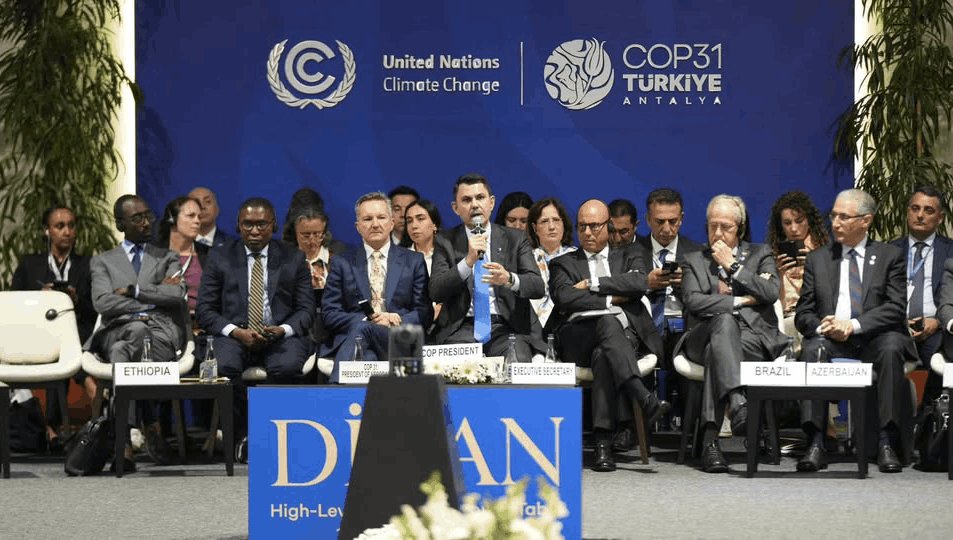
As COP31 enters its final days, Türkiye’s centuries-old “Divan” tradition has become a platform for bringing ministers together to narrow differences and build consensus on key climate decisions.
COP31 President Murat Kurum and President of Negotiations Chris Bowen used the traditional consultation format to encourage open discussions on how to bring different negotiating positions into a balanced final agreement.
The four-hour meeting, held on November 18, brought together ministers from more than 100 countries, alongside representatives of negotiating groups and observer constituencies from over 190 countries. UNFCCC Executive Secretary Simon Stiell and UN Special Adviser on Climate Action Selwin Hart also took part.
The Divan, rooted in Türkiye’s political and cultural history, represents a council where people with different responsibilities exchange views, consider difficult issues and seek common ground. Its best-known historical example is the Ottoman Imperial Council, or Divan-i Hümayun
During the COP31 gathering, participants discussed areas where agreement was possible, the remaining differences and the conditions needed to reach a final deal. Kurum said the discussions would help guide the presidency’s consultations during the remaining days of the conference.
The meeting comes as negotiations remain challenging on major issues, including climate finance, adaptation, just transition and the global response to climate change. The presidency has identified 21 agenda items that still require resolution.
Bangladesh’s key priorities For Bangladesh and other climate-vulnerable countries, the final agreement must deliver concrete financial support and implementation measures.
Bangladesh’s key priorities include a clear baseline year and financial target for tripling adaptation finance; new and additional funding for the Loss and Damage Fund; and simple, direct access to climate finance.
The country is also calling for grant-based climate finance rather than loans, protection of developed countries’ obligations under Article 9.1 of the Paris Agreement, and financial support to implement National Adaptation Plans in least developed countries.
Bangladesh and other vulnerable nations are expected to continue working through the LDC Group, G77 and other negotiating alliances to ensure that the final package reflects the needs of countries most exposed to climate impacts.
The outcome of COP31 will ultimately depend on whether the Divan’s spirit of consultation can translate into an agreement that delivers meaningful action, adequate finance and a fair response to the climate crisis.