

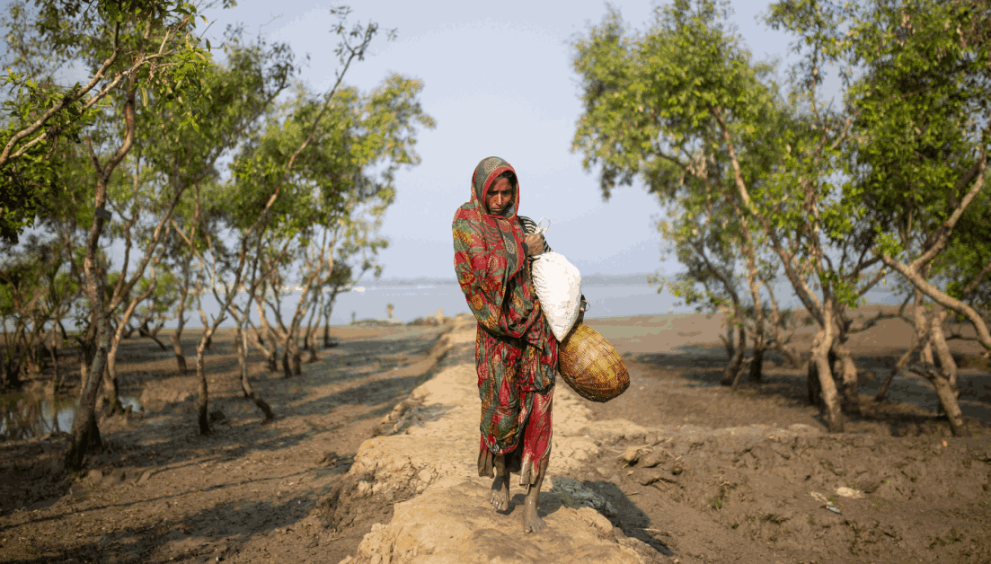
In the salinity-affected coastal upazilas of Koyra in Khulna and Assasuni in Satkhira, the water residents drink may be quietly elevating their risk of cardiovascular disease. Preliminary findings from a multi-year study show that one in five people aged 40 and older in these areas now faces a moderate-to-high risk of heart disease, underscoring how climate-driven salinity is emerging as a public-health threat.
The results were presented on Monday at a seminar in Dhaka organised jointly by icddr,b and Imperial College London. Researchers surveyed more than 27,000 water sources and screened over 15,000 adults across 172 villages under the NIHR Global Health Research Centre for Non-Communicable Diseases and Environmental Change.
More than half of the drinking-water sources tested in Koyra were saline, compared with nearly a quarter in Assasuni. Sodium exposure from saline water is linked to higher blood pressure and, in turn, to greater risk of heart and kidney disease; pregnant women face additional risks.
Aliya Naheed, senior scientist at icddr,b, who presented the findings, said the problem has moved beyond an environmental issue. “Drinking water salinity is no longer only an environmental challenge,” she told the seminar, noting that it is now driving up cardiovascular and kidney disease risk in coastal communities.
The local figures stand in contrast to earlier national data. A WHO survey had estimated cardiovascular risk at roughly 9 percent among Bangladeshi adults aged 40–69. In Koyra and Assasuni the rate reached about 11 percent in the same age group and climbed to 21.6 percent when the broader population aged 40 and above was included.
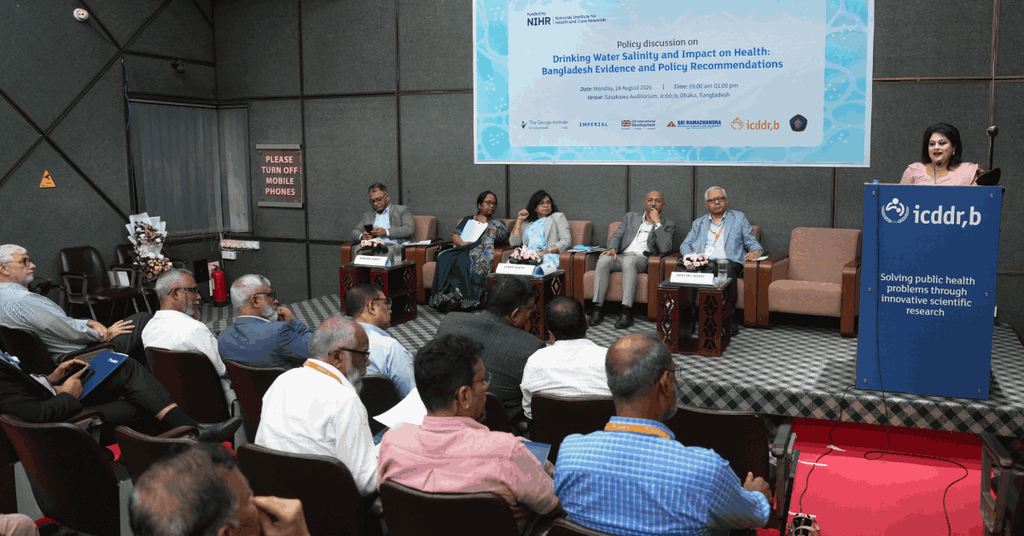
Scientists at the event linked the health findings to extreme weather. Professor Adrian Butler of Imperial College London presented evidence that cyclone-driven storm surges can leave ponds and shallow groundwater salinised for years, and called for stronger embankments and faster restoration of safe water sources after storms. Professor Paolo Vineis, also of Imperial, observed that science has yet to establish a clear health-based safety threshold for salinity in drinking water—a gap he urged national and international bodies to address.
Tahmeed Ahmed, executive director of icddr,b, noted that research connecting climate change to health outcomes in Bangladesh remains limited, and evidence on effective adaptation strategies is scarcer still. His institution is testing integrated solutions that combine improved access to low-salinity water with stronger primary healthcare and community participation.
The research team has designed an intervention package that expands access to safer water through rainwater harvesting, pond sand filters and tube wells, while strengthening primary care with digital screening and follow-up for hypertension, diabetes and chronic kidney disease.
Fahmida Khanom, secretary in-charge at the Ministry of Environment, Forest and Climate Change, said the findings bolster Bangladesh’s position in global climate negotiations by providing science-based arguments for greater adaptation and mitigation support.
As sea levels rise and cyclones intensify across the Bay of Bengal, researchers say the experience of Koyra and Assasuni offers an early warning of the health risks climate-driven salinity may pose to coastal populations worldwide.