
India and Bangladesh opened a crucial round of river-sharing negotiations in Kolkata on Thursday as both countries prepare for the 2026 expiry of the landmark Ganges Water Sharing Treaty, amid rising concerns over dry-season water shortages, climate stress, and regional water security.
The 90th meeting of the Joint Rivers Commission (JRC), the highest bilateral technical platform on transboundary rivers between the two neighbours, comes at a sensitive time for water diplomacy in South Asia. The three-day meeting, running through Saturday, is expected to focus on river flow monitoring, technical compliance, and implementation issues under the existing treaty framework, while broader questions over the future of the agreement loom in the background.
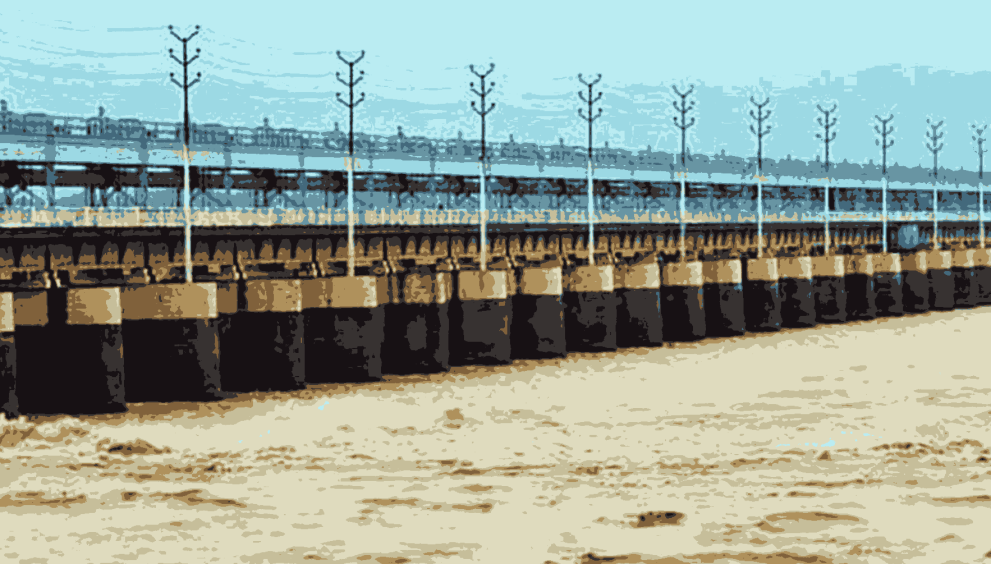
A six-member Bangladeshi delegation arrived in Kolkata on Wednesday to participate in the discussions and conduct inspections at the Farakka Barrage in India’s West Bengal state, where water-sharing measurements are jointly monitored during the dry season.
The Bangladeshi team is led by Mohammad Anwar Kadir, a member of the Joint Rivers Commission, Bangladesh. The delegation also includes senior representatives from the Ministry of Water Resources, the Bangladesh Water Development Board, and the Ministry of Foreign Affairs. Officials from the Bangladesh High Commission in New Delhi and the Deputy High Commission in Kolkata are also taking part.
India is being represented by officials from the Union Ministry of Jal Shakti and West Bengal’s Irrigation Department.
The current Ganges Water Sharing Treaty, signed on December 12, 1996, between India and Bangladesh, governs the distribution of dry-season flows from the Ganges River at the Farakka Barrage between January 1 and May 31 each year. The agreement was signed for 30 years and is set to expire at the end of 2026 unless renewed or renegotiated.
Under the treaty’s allocation formula, when water flow at Farakka exceeds 75,000 cusecs, India receives 40,000 cusecs, and Bangladesh gets the remaining flow. If the flow ranges between 70,000 and 75,000 cusecs, Bangladesh is guaranteed 40,000 cusecs while India receives the rest. When flows drop below 70,000 cusecs, the two countries share the water equally.
Although officials on both sides described the latest JRC meeting as a routine annual engagement under the treaty mechanism, the timing has heightened diplomatic interest because negotiations over the future of the agreement are expected to intensify in the coming months.
As part of the program, the Bangladeshi delegation visited the Farakka Barrage on Thursday to inspect the joint flow measurement station and review whether water discharge monitoring is being conducted according to agreed technical standards.
Speaking to Bangladeshi media before departing for Kolkata, Mohammad Anwar Kadir said the visit was primarily technical in nature.
“We will inspect the Farakka site and review whether all measurements and procedures are being carried out properly under the treaty provisions,” he said.
He added that the discussions would focus on engineering procedures, hydrological measurements and operational compliance under the existing treaty framework.
However, he declined to comment on whether formal discussions regarding the renewal or renegotiation of the treaty would take place during the current meeting.
The Joint Rivers Commission, established in 1972, serves as the principal bilateral body for cooperation on shared rivers between India and Bangladesh. The two countries share 54 transboundary rivers, making water management a politically and environmentally sensitive issue in bilateral relations.
The Farakka Barrage has remained one of the most contentious aspects of India-Bangladesh water diplomacy for decades. Bangladesh has long expressed concern that upstream diversion of water during the dry season affects agriculture, fisheries, navigation and ecosystems in downstream areas, particularly in the country’s southwest region.
Water experts and analysts say the upcoming expiry of the treaty presents both a diplomatic challenge and an opportunity for renewed cooperation.
Climate change, changing rainfall patterns and increasing upstream water demand are placing additional pressure on river systems across South Asia. In Bangladesh, concerns have intensified over declining dry-season flows in major rivers, increasing salinity intrusion in coastal areas and threats to livelihoods dependent on river ecosystems.
Analysts say future negotiations over the Ganges Treaty are likely to involve broader discussions on climate resilience, basin-wide river management and data transparency between the two countries.
The issue also carries geopolitical significance as water security increasingly emerges as a strategic concern across the region. Any disruption or prolonged uncertainty over dry-season water sharing could affect agriculture, food security, and ecological stability in downstream Bangladesh.
Despite recurring tensions over transboundary water management, India and Bangladesh have maintained regular technical cooperation under the treaty framework for nearly three decades. Under the existing mechanism, three meetings are typically held every year to review implementation and monitor water-sharing arrangements.
Diplomatic observers say the current round of talks could help shape the tone for future political negotiations over extending or revising the treaty before its expiry deadline next year.