Nearly 50 decisions and $2 billion in announced funding mark progress at the UN biodiversity summit in Armenia, but inadequate finance, weak action on harmful subsidies and limited corporate contributions leave global nature goals at risk.
The world has just four years left to reverse biodiversity loss, but governments are still struggling to find the money and political will needed to protect nature.
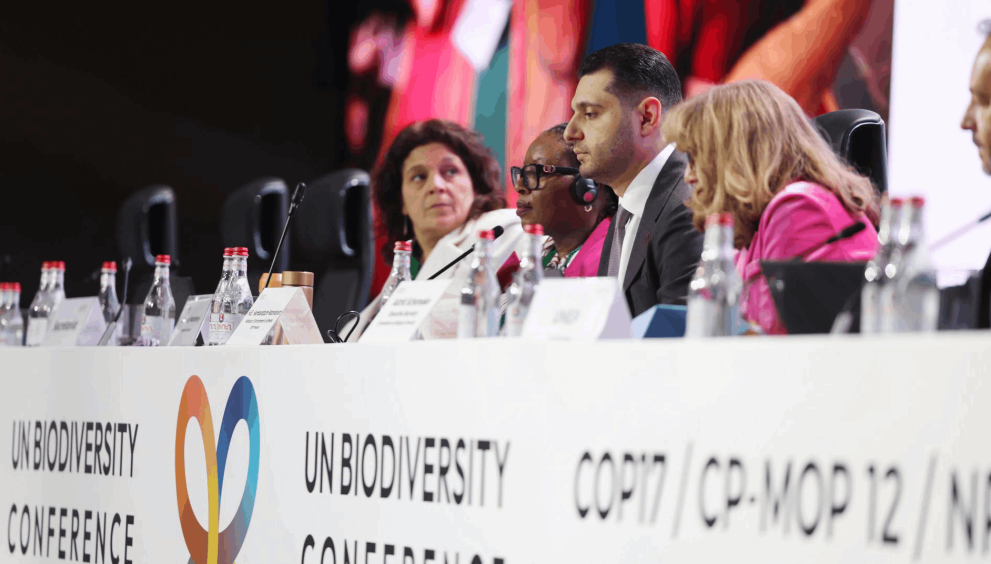
That was the central message from the 17th United Nations Biodiversity Conference (COP17), which concluded in Yerevan, Armenia, on October 31 after two weeks of negotiations that continued beyond the scheduled closing date.
Delegates adopted nearly 50 decisions, including the Yerevan Pathway, intended to accelerate implementation of global biodiversity commitments. The conference also announced nearly $2 billion in biodiversity-related financing.
However, the first global assessment of progress revealed a troubling picture: the world remains off track to achieve its 23 biodiversity targets by 2030.
The outcome highlighted a widening gap between international promises and practical conservation efforts, particularly in developing countries facing financial pressures, habitat destruction and accelerating climate change.
A roadmap to rescue global biodiversity
The Yerevan Pathway emerged as the summit’s central political achievement, setting priorities for implementing the Kunming-Montreal Global Biodiversity Framework adopted in 2022.
That agreement commits countries to protecting at least 30% of the world’s land, inland waters and marine areas, restoring 30% of degraded ecosystems and mobilising substantial finance for conservation by 2030.
The first global review found that progress remains insufficient across almost all targets.
According to the UN assessment, only 45% of countries had submitted updated national biodiversity strategies and action plans in time to be considered, while 83% had submitted at least one national target.
The Yerevan agreement calls for faster national implementation, stronger monitoring, reform of environmentally harmful subsidies and greater financial and technical assistance for developing countries.
COP17 President Hambardzum Matevosyan described the agreement as evidence that countries could overcome differences and establish common priorities.
Yet the negotiated pathway does not itself guarantee new finance or stronger conservation enforcement. Its success will depend on national policies and the resources available to implement them.
Nearly $2 billion announced, but financing remains inadequate
Money dominated negotiations as developing countries demanded greater support from wealthy nations to restore damaged ecosystems and protect biodiversity.
The UN Convention on Biological Diversity reported nearly $2 billion in new funding announcements, including $560 million associated with the Global Environment Facility’s ninth replenishment and Global Biodiversity Framework Fund.
Other announcements included $500 million through the Species Recovery Alliance and more than $330 million through the Value Nature Fund, which aims to attract private investment.
However, these announcements represent different financing arrangements and commitments rather than money already delivered directly to conservation projects.
Under the global biodiversity framework, countries agreed to mobilise at least $200 billion annually from all sources by 2030. Developed countries also committed to providing at least $20 billion annually in international biodiversity finance by 2025, a milestone that has not been achieved.
A major disagreement concerned which countries should contribute.
Developed nations argued that rapidly growing economies should assume greater financial responsibility. Developing countries maintained that existing obligations and historical responsibilities must remain central.
The final compromise invites countries outside the established donor group to voluntarily express interest in taking on additional obligations.
Governments also agreed on criteria for a permanent biodiversity financial mechanism after 2030, but postponed decisions on its institutional structure until COP18.
Cali Fund struggles to attract corporate payments
Another disappointment concerned the Cali Fund, created at COP16 in Colombia to share benefits arising from commercial use of digital sequence information, or genetic data obtained from living organisms.
Such information supports industries including pharmaceuticals, agriculture and biotechnology.
The fund was designed to channel resources towards biodiversity conservation and communities whose natural resources and knowledge help generate commercial value.
But contributions remain extremely limited.
According to Carbon Brief’s assessment of the negotiations, the fund had attracted only about $10,565 in pledges by the end of COP17, with actual deposits below $9,000.
No major company from the identified sectors had contributed.
Governments reaffirmed indicative corporate contribution rates of 0.1% of revenue or 1% of profits and adopted further arrangements for allocating resources.
At least half of the fund’s resources are intended to support the self-identified needs of Indigenous Peoples and local communities.
A new working group will continue negotiating operational details before COP18 in 2028.
Without substantial corporate payments, however, these benefit-sharing arrangements offer little immediate financial relief.
Harmful subsidies remain a major obstacle
Governments also struggled over subsidies that encourage activities damaging to biodiversity, including intensive agriculture, fossil fuel consumption and unsustainable fishing.
The global biodiversity framework requires countries to reduce harmful incentives by at least $500 billion annually by 2030.
Yet progress towards this target remains among the weakest.
The final COP17 decision encourages governments to accelerate reform according to national circumstances but does not establish binding sector-specific measures.
Armenia launched a political initiative promoting biodiversity-positive incentives, while a new coalition, Friends of Target 18, aims to support countries pursuing subsidy reform.
Conservation groups welcomed the greater political attention but warned that voluntary commitments alone would not reverse the economic pressures driving ecosystem destruction.
Indigenous rights and ocean protection advance
The summit achieved progress in strengthening the participation of Indigenous Peoples and local communities.
Countries agreed on operating procedures, known as the Sevan Guidelines, for a permanent subsidiary body established under Article 8(j) of the biodiversity convention.
The mechanism is intended to strengthen community participation and recognition of traditional knowledge in global conservation decisions.
COP17 also adopted decisions concerning protected areas, forest biodiversity, wildlife management, invasive species and marine ecosystems.
However, negotiations exposed continuing disagreements over the relationship between biodiversity governance and the High Seas Treaty.
Although countries agreed to establish an advisory group on biodiversity beyond national jurisdiction, several stronger references to the treaty were weakened or removed.
The International Union for Conservation of Nature welcomed progress but warned that the outcomes remained insufficient to match the scale of the global biodiversity crisis.
Bangladesh faces a $3.3 billion challenge
For Bangladesh, where mangrove forests, wetlands, rivers and coastal ecosystems face growing development and climate pressures, the outcome has particular significance.
At COP17, Bangladesh presented 23 national biodiversity targets covering 107 actions, with an estimated implementation requirement of $3.3 billion.
Dr Fahmida Khanom, acting secretary of the Ministry of Environment, Forest and Climate Change, called for more accessible international finance, technology transfer and scientific cooperation.
Bangladesh also urged financial reforms, including more affordable borrowing and longer debt repayment periods, to help vulnerable economies invest in nature protection.
The country’s conservation challenges include protecting the Sundarbans, restoring degraded forests, safeguarding freshwater biodiversity and addressing pressure on coastal habitats.
The Yerevan decisions could support these priorities, but the availability and accessibility of funding remain uncertain.
The next four years will determine success
The conference’s closing agreement preserved international cooperation at a time of growing political and financial divisions.
But it also demonstrated that diplomatic consensus does not necessarily deliver the resources needed to restore ecosystems.
CBD Executive Secretary Astrid Schomaker warned: “We cannot protect nature while continuing to finance its destruction.”
The next biodiversity summit, COP18, will take place in Quito, Ecuador, in 2028, leaving just two years before the global framework’s deadline.
By then, governments will face mounting pressure to demonstrate actual improvements in forests, oceans, wetlands and wildlife populations.
For countries and communities already experiencing ecosystem decline, the crucial question is no longer whether governments can agree on protecting nature.
It is whether they can act quickly enough to prevent further irreversible losses.