
Santa Marta, Colombia — A coalition of countries is calling for the creation of a new international legal framework to drive a fair and accelerated global phase-out of fossil fuels, marking a significant shift in the politics of climate action ahead of a major international conference in Colombia.
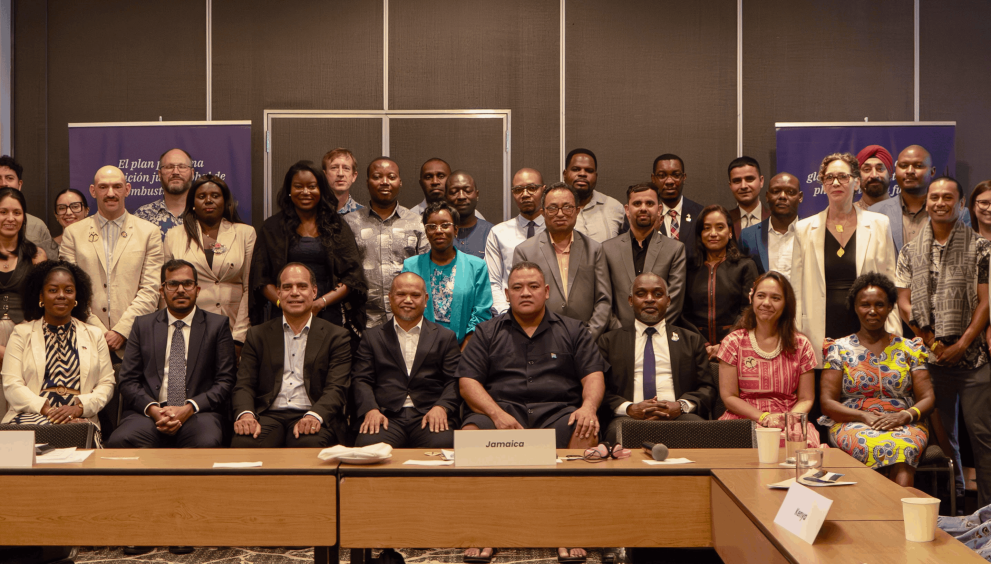
The proposal emerged from a three-day ministerial and senior officials’ meeting held in Santa Marta, a Caribbean port city historically tied to coal exports. The gathering brought together ministers and delegates from across Africa, Asia, Latin America, the Caribbean and the Pacific, including 18 countries aligned with the Fossil Fuel Treaty Initiative, along with 10 observer states.
Participants urged the upcoming First International Conference on Transitioning Away from Fossil Fuels to formally recognise the need for a new binding treaty — one that would directly regulate fossil fuel production and supply, areas largely left unaddressed by existing global climate agreements.
The meeting concluded just ahead of the conference’s high-level segment, which is expected to draw representatives from more than 60 countries. Organisers say the coalition reflects a growing alliance of nations, many of them highly vulnerable to climate impacts, seeking stronger global governance to accelerate the transition away from coal, oil and gas.
A push beyond existing climate frameworks
For decades, international climate negotiations under frameworks such as the United Nations climate process have focused primarily on reducing greenhouse gas emissions. However, coalition members argue that these mechanisms have failed to adequately address fossil fuel production itself — the root cause of the crisis.
“The absence of a dedicated global framework to manage fossil fuel supply is not accidental,” said Steven Victor, environment minister of Palau. “It is a gap that has allowed expansion to continue despite mounting scientific and moral urgency.”
Delegates said the proposed treaty would establish legally binding obligations on countries to manage and reduce fossil fuel production in line with the 1.5°C temperature target. It would also aim to create the financial and legal architecture needed to support a just transition, particularly for developing economies dependent on fossil fuel revenues.
The coalition identified four key priorities for advancing the proposal: formally recognising the governance gap and initiating treaty negotiations; developing mechanisms for international cooperation and finance; supporting the continuation of the conference process; and ensuring that any agreement is grounded in equity, human rights and the participation of Indigenous peoples.
Finance, equity and global cooperation at the centre
A central element of the proposed treaty is the creation of new financial mechanisms to support countries transitioning away from fossil fuels. These include proposals for a Global Just Transition Fund, a Debt Resolution Facility to ease financial pressures on developing nations, and an “Importers-Exporters Club” to coordinate global action.
Colombia’s environment minister Irene Vélez Torres, who chaired the meeting, described the initiative as a critical step toward ensuring that developing countries are not left to bear the costs of a crisis they did little to create.
“A transition away from fossil fuels must be rooted in equity,” she said, emphasising the need for financial support and policy space to help countries diversify their economies and invest in sustainable energy systems.
Small island nations and least developed countries, many of which face existential threats from rising sea levels and extreme weather, were among the most vocal supporters of the proposal.
Tuvalu’s minister for climate change, Maina Vakafua Talia, framed the issue in stark terms: “For us, this is not a negotiating position — it is a matter of survival.”
Legal momentum and growing support
The coalition also pointed to recent developments in international law as strengthening the case for a treaty. A recent advisory opinion from the International Court of Justice, which suggested that certain fossil fuel activities could constitute internationally wrongful acts, was cited as further evidence of the need for a clear legal framework governing production and expansion.
The presence of 10 observer states at the meeting — the largest number to date — highlighted growing global interest in the initiative. Countries such as Ghana and Kenya indicated that they are actively exploring participation, with some reporting strong domestic support for joining the treaty process.
Kenya, for example, has made significant progress in renewable energy but remains reliant on fossil fuels in sectors such as transport. Officials said international cooperation and finance would be essential to sustaining and expanding these gains.
Meanwhile, Ghana signalled that it may soon formally join the initiative, following consultations with stakeholders across government and industry.
Addressing systemic barriers
Delegates also discussed broader structural challenges that could hinder a global transition, including debt burdens, investor-state dispute settlement mechanisms and market pressures that incentivise continued fossil fuel expansion.
Ralph Regenvanu, climate minister of Vanuatu, said the proposed treaty could provide a framework to address these barriers, including through coordinated timelines for phase-out and safeguards to protect countries from legal and financial risks.
“Moving beyond the question of whether to act, we now need to focus on how to implement a fair and orderly transition,” he said.
At the same time, the coalition warned against reliance on what it described as “false solutions,” such as carbon capture and storage, offsetting schemes and geoengineering. These approaches, delegates argued, risk prolonging fossil fuel dependence rather than enabling a genuine transition.
A parallel process to break political deadlock
The Santa Marta conference is part of a broader effort to overcome longstanding political deadlock in global climate negotiations, where consensus-based decision-making has often slowed progress.
The idea for the conference series emerged in late 2024, when a group of countries agreed to convene dedicated forums focused specifically on fossil fuel transition. Colombia offered to host the first meeting in 2025, drawing on historical precedents such as the Ottawa Convention, which successfully mobilised a coalition of willing states to negotiate a binding treaty on landmines.
A second conference is expected to take place in the Pacific region within a year, hosted by Tuvalu, signalling the start of an ongoing international process aimed at building momentum toward a formal treaty.
Global mobilisation beyond the negotiating room
The push for a Fossil Fuel Treaty is also being echoed by civil society movements worldwide. In the lead-up to the Santa Marta conference, thousands of people participated in more than 140 events across over 30 countries, including rallies, public forums and artistic actions calling for a phase-out of fossil fuels.
Cities from Dhaka to Oslo and from Kampala to Seattle saw coordinated actions, reflecting a growing global movement demanding stronger climate action and accountability from governments.