Bangladesh has called for greater use of jute and natural fibres as cost-effective solutions to climate change, waste reduction and climate adaptation at the UN Climate Change Conference (COP31) in Türkiye.
The call was made during a special session titled Natural Fibres, Zero Waste and Low-Cost Adaptation: Bangladesh’s Jute in the COP31 Action Agenda at the Bangladesh Pavilion in the Blue Zone on Friday, November 13.
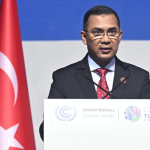
The session was chaired by State Minister for Foreign Affairs Shama Obaed Islam and jointly organised by Bangladesh’s Ministries of Foreign Affairs, Textiles and Jute, and Agriculture, in collaboration with Türkiye’s Zero Waste Foundation, the UN Office for Project Services (UNOPS) and the Global Center on Adaptation (GCA).
In her opening remarks, Shama Obaed highlighted jute, often called Bangladesh’s golden fibre, as a renewable and biodegradable alternative to synthetic materials.
She also highlighted Bangladesh’s low-cost adaptation initiatives, including floating gardens, early warning systems and salt-tolerant crop cultivation, noting that climate resilience does not always require large financial investments.
Mehmet Galip Ensarioglu, Chairman of the Environment Committee of Türkiye’s Grand National Assembly, praised Bangladesh’s experience in the jute sector and said it could offer valuable lessons for developing a circular economy.
UNOPS Asia-Pacific Director Sarah Austin Netzer said the organisation was supporting Bangladesh in developing green and climate-resilient infrastructure and would strengthen cooperation on implementing the country’s third Nationally Determined Contribution (NDC 3.0).
Other speakers highlighted opportunities to expand natural fibres in the global fashion industry and promote sustainable consumption. Sofia Young, founder of Threading Change and a World Economic Forum Global Shaper, called for reducing dependence on plastic-based synthetic fibres.
Kosovo’s Minister of Environment and Spatial Planning, Fitore Pacolli, expressed interest in jute-based products, saying the country was open to exploring their use.
Matthew McKinnon, founder and executive director of Aroha, described Bangladesh’s jute initiative as an example of how the country could contribute to global climate action despite having a relatively small share of global carbon emissions.
Dr Faisal Rahman, a water and climate adaptation specialist at GCA, also expressed the organisation’s interest in strengthening cooperation with Bangladesh on sustainable climate action.
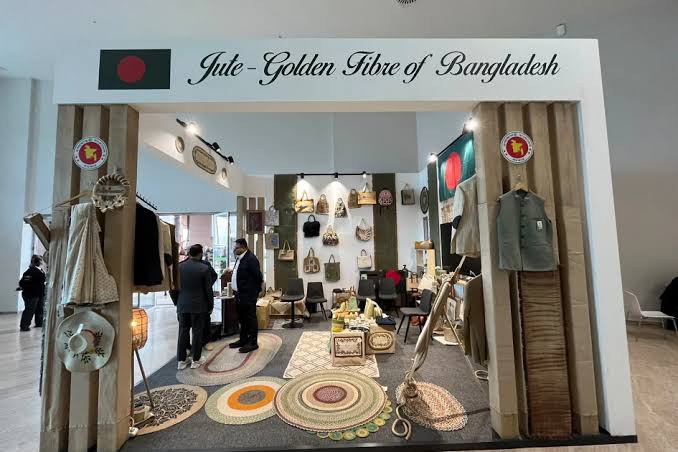
For the first time at a UN climate conference, Bangladesh has established a dedicated Jute Pavilion, showcasing 130 types of jute products weighing approximately 550 kilograms as alternatives to plastic.
The initiative aims to promote Bangladesh’s jute industry as part of its broader climate diplomacy and economic diplomacy efforts.