Activists, civil society organisations and grassroots movements have called for climate justice, democracy, human rights and a just transition away from fossil fuel-dependent economic systems at the People’s Climate Summit Beyond COP31 in Antalya, Türkiye.
The summit, held from 14 to 18 November at Mimar Sinan Congress Centre, brought together representatives of social movements, Indigenous communities, workers, farmers, fishers, youth groups and environmental justice organisations from different parts of the world.
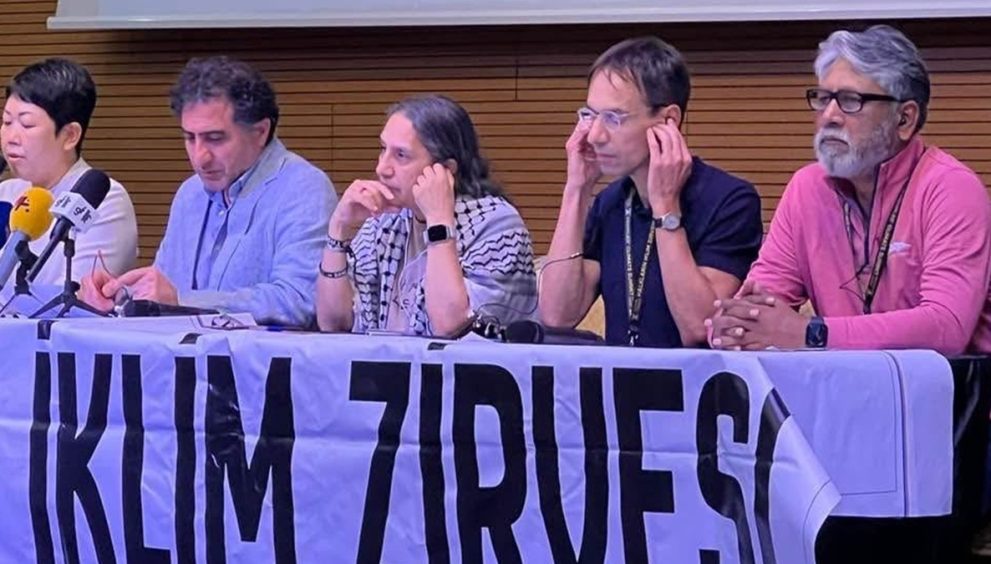
At the opening session on 15 November, speakers included Sharif Jamil, Global Board Member of Waterkeeper Alliance; Tasnim Essop, President of Climate Action Network (CAN) International; Tomo Iwabuchi of the Japanese Communist Party; sociologist Markus Wissen; and Isehan Balta, representing the People’s Climate Summit.
Speakers emphasised the need for global solidarity, human rights and a just transition to address the climate crisis.
Call for Climate Reparations and Accountability
In his remarks, Sharif Jamil called for adequate climate finance, including compensation for loss and damage suffered by climate-vulnerable communities.
He raised questions about who should be held accountable for climate-related disasters, including the devastating floods in Feni, Bangladesh, in 2024, extreme rainfall in Istanbul and Bangkok, and the severe heatwave that disrupted daily life in London during London Climate Week.
He stressed the need for effective institutional mechanisms to ensure accountability for countries in the Global North, which bear greater historical responsibility for climate change. He also called for climate finance and compensation to be recognised as the rightful claims of affected communities.
Global Solidarity Against War and Militarisation
Tasnim Essop spoke against war and militarisation, criticising the disparity between the resources mobilised by powerful countries for military operations and their efforts to fulfil climate commitments.
She called for a united global movement to hold governments and other responsible actors accountable and push them towards meaningful action through international climate negotiations such as COP31.
Building a Global Movement for Climate Justice
The summit also called for stronger global movements against war and militarisation, fossil fuel expansion, corporate-controlled food systems and ecosystem destruction.
Participants highlighted the importance of climate justice, global accountability and the repayment of historical climate debt.
The gathering began on 14 November with a joint march through the streets of Antalya as part of a global day of action. Discussions and collective activities continued until 18 November.
The summit provided a platform for grassroots communities and social movements to bring their demands into the wider global climate debate, emphasising that climate action must be rooted in justice, democracy and the rights of people most affected by the crisis.