
Two studies show extreme heat cutting workdays and incomes while raising medical costs, leaving informal workers trapped between unsafe labour, overheated homes and weak social protection.
Extreme heat could cost Bangladesh’s agriculture and construction workers almost 24 working days a year by 2030, while a separate Dhaka survey suggests many labourers are already losing weeks of work, income and health to rising temperatures.
The findings turn heat from a seasonal weather story into a national labour, health and poverty crisis. For workers paid by the day or by output, slowing down is not merely a productivity loss recorded in an economic model. It can mean less food, delayed rent, untreated illness or new debt.
A global analysis released by adelphi in July projects that workers in Bangladesh’s agriculture and construction sectors will lose the equivalent of 23.75 working days annually to heat stress by 2030. Working-hour losses in those sectors are projected to rise from 6.28 per cent to 9.58 per cent even under a low-emissions scenario. Across all sectors, the loss is expected to increase from 4.24 per cent to 4.84 per cent.
The report links two pressures that are often assessed separately. Heat reduces income when people must work more slowly, rest or stop. It also raises household costs when dehydration, exhaustion and other illnesses require treatment. Bangladesh’s reliance on direct household health spending makes that combination particularly dangerous.
In 2023, households paid 79.3 per cent of the country’s total health expenditure out of pocket, up from 62 per cent in 2002, according to the adelphi analysis. Annual per-person out-of-pocket medical spending has increased by more than 830 per cent since 2000. A heat-related illness can therefore remove income on the same day that it creates a medical bill.
The national projection is reinforced by field research released on Aug 12 by the International Institute for Environment and Development and Ovibashi Karmi Unnayan Program. Researchers interviewed 175 households engaged in informal work in Dhaka, including construction, rickshaw pulling and garment production.
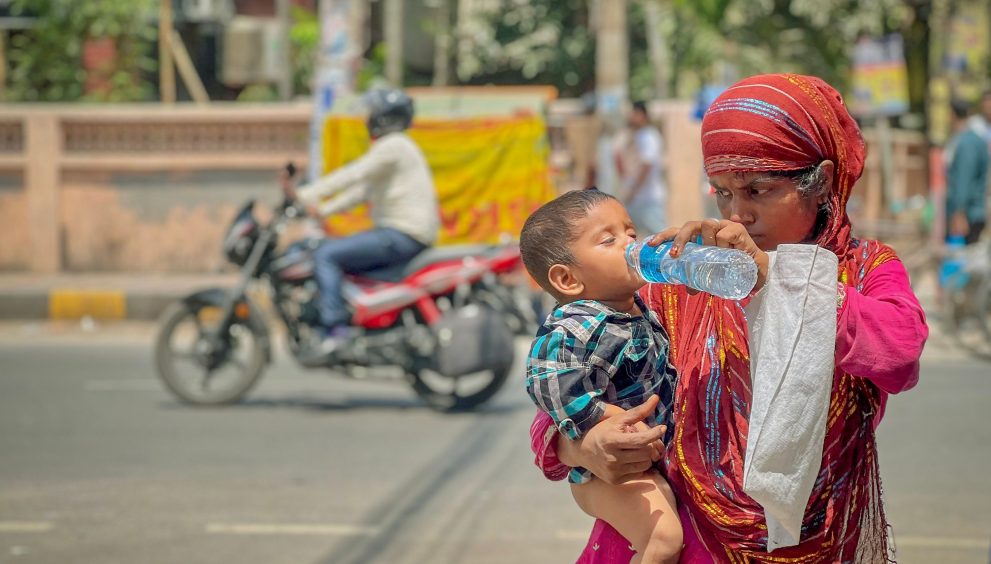
Outdoor workers said heat forced them to miss 24 days of work a year on average, while indoor workers missed 14 days. The study estimated that outdoor workers lost about 8.5 per cent of annual income, or $149, and indoor workers lost 4.5 per cent, or $89. Those sums are large for households already earning below the living wage calculated for the capital.
The research also challenges the assumption that a roof guarantees protection. Garment workers and others employed indoors can face intense temperatures in crowded buildings, particularly where ventilation is poor, production targets are strict and power cuts interrupt fans or cooling. When shifts end, many workers return to small rented rooms with tin or asbestos roofs, low ceilings, limited water and little chance to cool down before the next day.
Nearly a quarter of respondents reported symptoms associated with kidney injury following repeated dehydration, while psychological stress doubled in the hotter season, the IIED study said. Workers described low mood, anxiety, sleep problems, irritability and mistakes at work. Heat can therefore raise the risk of accidents at the same time that it reduces concentration and physical capacity.
The two studies use different methods and should not be treated as interchangeable national estimates. Adelphi’s analysis projects sectoral working-hour losses and cites a much larger global estimate of heat-related labour and productivity costs. IIED extrapolates wage losses from a focused household survey in Dhaka. A World Bank study released in 2025 used another method and estimated that heat-related physical and mental-health conditions cost Bangladesh up to $1.78 billion in 2024.
The variation is not a reason to dismiss the evidence. It is a warning that Bangladesh lacks a single, routinely updated system linking temperature, humidity, occupation, illness, wage loss and death. Each study measures a different part of the burden. Together they show that the cost is already large and that the people absorbing it often have the least financial protection.
The exposure is likely to deepen. Adelphi projects that many parts of Bangladesh will experience between 183 and 239 days a year above 30 degrees Celsius during 2020-2039, with high to very high humidity-based heat risk. Humidity matters because it limits the body’s ability to cool through sweating. A temperature that appears manageable on a dry day can become dangerous when humidity and heavy physical work combine.
Women face distinctive risks. Nearly all women working in agriculture are informally employed, according to the report. Many also perform unpaid care and cooking in poorly ventilated homes, adding heat exposure after paid work ends. Pregnancy, limited sanitation, restricted mobility and unequal access to water or health care can intensify the danger.
Bangladesh’s labour law does not set a clear temperature threshold for unsafe work and does not recognise heatstroke or heat-related kidney disease as compensable occupational illnesses, IIED said. That leaves workers with limited leverage to demand rest, water, shade or adjusted hours, particularly in informal jobs where there is no written contract.
Researchers have proposed a package of immediate protections. Employers can schedule heavy work for cooler hours, provide shaded rest areas, ensure safe drinking water and toilets and train supervisors to recognise heat illness. Work-rest cycles should be tied to temperature and humidity rather than left to discretion. Emergency plans should specify when work must stop and how affected workers will receive first aid and transport.
Those measures must avoid shifting risk. Moving work into the night may reduce solar exposure but can disrupt sleep, increase insecurity for women and expose workers to other hazards. Longer breaks are ineffective if wages or production targets are unchanged. A heat standard must therefore protect both health and income.
The IIED study recommends weather-triggered cash support delivered through mobile financial services and linked to the national identity system. Researchers estimated that a small daily transfer during dangerous heat could cost less than $100 million even in a record year, far below their estimate of the current national wage loss. Seasonal mobile health clinics could reach urban informal workers who are excluded from existing schemes.
Longer-term adaptation requires cooler housing, more urban trees, reflective roofs, ventilation, reliable electricity and accessible public water. Health facilities need surveillance protocols that record occupation and heat exposure, allowing authorities to identify hotspots and issue targeted warnings. Weather alerts must also be translated into actions that employers and workers understand.
Climate finance should recognise heat protection as essential adaptation. Bangladesh has traditionally invested in visible disaster infrastructure such as embankments and shelters. The heat crisis requires a parallel focus on labour rules, health systems, housing and social protection. These are less dramatic than a cyclone barrier, but they can prevent slow, repeated losses that accumulate across millions of working days.
For a daily labourer, the choice should not be between income and survival. The new evidence shows that this is already the choice many workers face. Bangladesh’s response will be judged by whether it converts heat warnings into enforceable rights, affordable care and protection for the households carrying the cost of a warming economy.