
A private-investment model could put nearly 60MW of solar on public universities without upfront state spending, but contracts, roof safety, tariffs and long-term oversight will determine success.
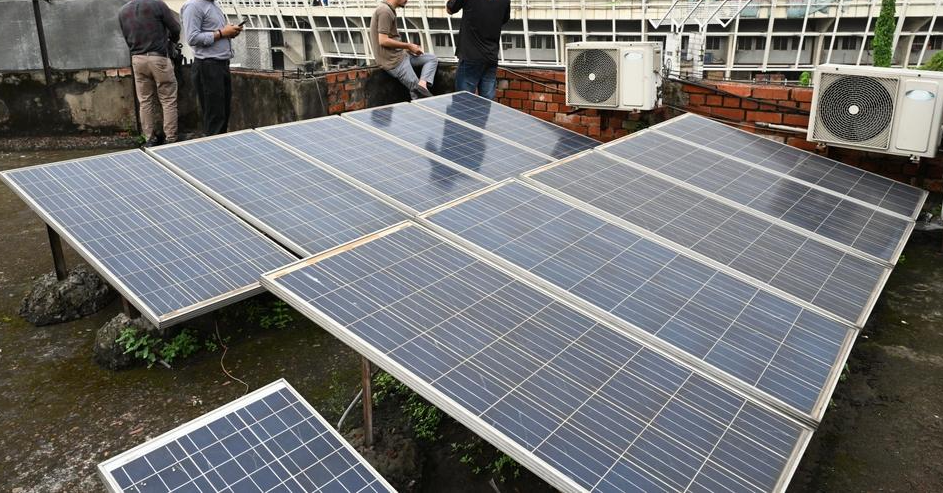
Bangladesh plans to install nearly 60 megawatts of rooftop solar across 31 public universities, testing whether public buildings can attract private clean-energy investment while cutting electricity costs and pressure on the national grid.
Feasibility studies have been completed at 47 public universities and one international university, according to the University Grants Commission. The assessment found that 31 public universities could initially host about 52.5MW, with capacity rising towards 60MW as new buildings are completed.
The programme would use an operational-expenditure, or OPEX, model. Private investors would finance, install, operate and maintain the systems. Universities would pay for the electricity they use rather than buying panels and equipment upfront, while surplus generation could be exported under net-metering arrangements where technically permitted.
The model addresses one of the biggest barriers to public-sector solar: institutions often lack capital for installation and specialist staff for maintenance. It also shifts construction and performance risk to companies whose revenue depends on keeping the system productive.
UGC officials say the electricity could cost less than Tk7.50 per unit under the proposed arrangement, compared with an average solar-power cost of around Tk15 per unit cited at the review meeting. M Shamsul Alam, dean of engineering at Daffodil International University, said a pilot OPEX project generated electricity at Tk7.50 per unit and that the price could fall to Tk7 at a scale of 3.5MW.
UGC Chairman Professor Mamun Ahmed said centralised tendering and monitoring could attract investment, reduce university power costs and lower the country’s dependence on imported energy. The commission wants public universities to reduce their average reliance on grid electricity by 20 per cent by 2030 and cut overall demand by 5 to 10 per cent through efficiency.
If the full 60MW is installed, the university programme would be a meaningful addition to Bangladesh’s still-small renewable fleet. SREDA recorded about 1,822MW of renewable capacity in early August 2026, most of it solar. The Renewable Energy Policy 2025 calls for clean sources to meet 20 per cent of electricity demand by 2030 and 30 per cent by 2040.
Rooftop solar is attractive because it avoids the land conflicts that can delay utility-scale projects in a densely populated country. Universities have large academic buildings, halls, libraries, laboratories and administrative blocks, many with daytime electricity demand that overlaps with solar production. That allows a system to displace relatively expensive grid power where it is generated.
Campuses can also aggregate demand. A single small roof may not interest an investor, but a centrally procured portfolio across several institutions can reduce design, financing and transaction costs. Standard contracts and shared technical requirements can make bids easier to compare and allow smaller universities to benefit from the negotiating power of the group.
The headline capacity, however, is not yet generation. The programme must move through structural surveys, tendering, financing, grid studies, installation, commissioning and years of operation. Each stage can reduce the final total if roof conditions, procurement disputes or utility approvals are not resolved.
Roof safety is the first test. Some university buildings are old, have undocumented modifications or were not designed for the additional load and wind forces created by solar structures. Independent structural assessments should certify each roof before equipment is installed. Fire access, drainage, lightning protection and emergency isolation must be included in the design rather than treated as later adjustments.
The condition of the roof must also be matched to the contract period. An investor may expect to recover costs over 15 or 20 years. Installing panels on a roof that requires major repair after five years creates disputes over removal, damage and lost generation. Contracts should identify who pays for roof upgrades, waterproofing, temporary removal and restoration.
Tariff design is equally important. A price below Tk7.50 per unit would appear attractive, but universities need to know whether the tariff is fixed, indexed to inflation, linked to the grid tariff or adjusted for exchange-rate movements. The agreement should specify taxes, metering, late payment, curtailment and what happens if a university’s demand changes.
Centralised procurement can produce scale, but it can also concentrate risk. A weak tender could lock dozens of institutions into the same poor terms. Bid evaluation should therefore consider more than the lowest price. Equipment quality, degradation guarantees, installer experience, insurance, response time, spare parts and end-of-life management all affect the real cost of electricity.
Performance data should be public. Each university could publish installed capacity, daily and monthly generation, grid consumption, exported electricity, tariff, downtime and avoided costs. A common dashboard would allow students, researchers, auditors and the UGC to compare promised and actual output. It would also reveal underperforming contractors before faults persist for months.
Maintenance is a central advantage of the OPEX model only when it is enforceable. Dust, bird droppings, shading, inverter faults and poor cable management can cut production. Service-level requirements should set maximum downtime and minimum performance ratios, with independent verification and penalties for failure. Cleaning plans must also use water efficiently and protect workers operating at height.
Grid integration requires close coordination with distribution utilities. Solar systems need approved connection studies, bidirectional meters and protection settings. Universities must know whether excess power can be credited, how long approvals will take and whether local transformers can accept the proposed capacity. Delays can leave completed systems unable to export or operate at full output.
The programme also creates an educational opportunity. Engineering, architecture, economics, agriculture and environmental-science departments can use campus systems as living laboratories. Students could analyse output, roof temperatures, storage options, demand patterns and financial performance. Research access should be written into the contracts without compromising security or commercially sensitive information.
Universities can pair generation with efficiency. Replacing inefficient lighting and cooling, managing laboratory loads and improving building envelopes may reduce demand more cheaply than adding panels. Energy audits should therefore accompany solar design. A campus that wastes electricity should not treat renewable supply as a substitute for conservation.
Equity matters within the portfolio. Newer universities with strong roofs and larger electricity bills may attract investors more easily than small or remote institutions. The UGC should explain how sites were selected and whether procurement will cross-subsidise less profitable campuses. Public money may still be needed for roof reinforcement, grid upgrades or institutions that do not meet private return requirements.
End-of-contract provisions must be clear from the beginning. Agreements should specify who owns the equipment at each stage, whether universities can buy the systems, how panels and batteries will be reused or recycled and who bears environmental responsibility for disposal. Bangladesh should avoid solving today’s energy problem by creating an unmanaged solar-waste problem two decades later.
The proposal can become a national template for hospitals, colleges and government offices if it performs well. That makes the quality of the first contracts particularly important. A transparent, technically rigorous programme could show that public roofs are bankable infrastructure. A rushed rollout could generate disputes, unsafe installations and underperforming assets that weaken confidence in the model.
Bangladesh does not lack roofs or sunlight. Its challenge is converting them into reliable, affordable electricity through contracts that protect the public interest for the life of the system. The 60MW university plan is large enough to demonstrate that model and visible enough for failure to be impossible to hide.