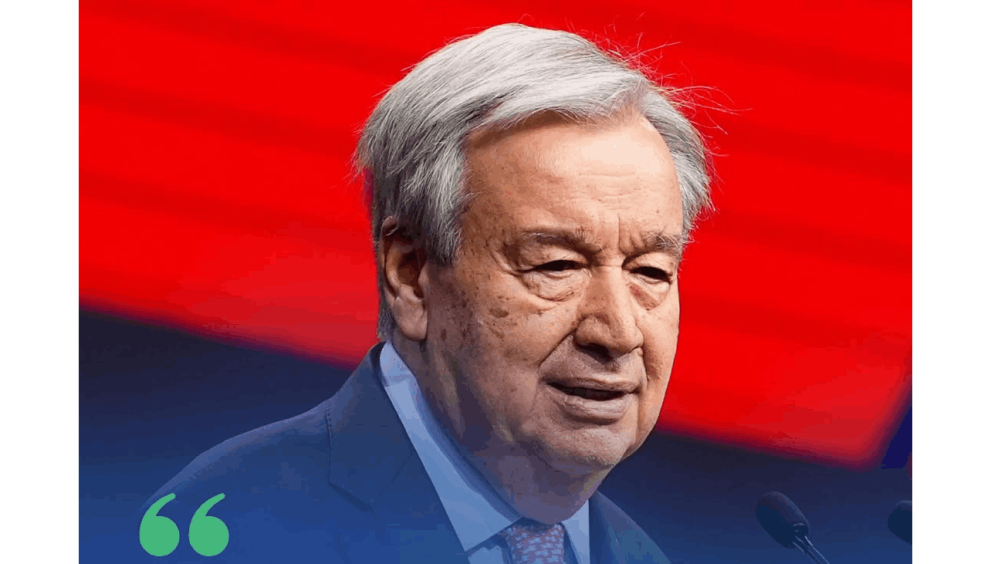
UN Secretary-General António Guterres has called for immediate and substantial cuts in greenhouse gas emissions to address climate risks and limit global warming to 1.5°C, as divisions over fossil fuels continue to complicate negotiations at COP31 in Türkiye.
Speaking on Friday at the end of the conference’s first week, Guterres urged major emitting countries to take urgent and effective action to keep the 1.5°C target within reach.
Under the 2015 Paris Agreement, countries committed to limiting global temperature rise to well below 2°C while pursuing efforts to keep it within 1.5°C. A recent UN report warned that the world is on track to exceed the 1.5°C threshold. Scientists say limiting warming is critical to avoiding the most severe impacts of climate change.
Guterres also criticised the disproportionate influence of fossil fuel lobbyists, saying the future of the planet should not be determined by those profiting from environmental destruction.
Negotiations remain divided over phasing out coal, oil and gas. Major producers, including Saudi Arabia and Russia, have opposed stronger measures, while major developing economies such as India have raised concerns about restrictions on their energy choices and development. The United States is also absent from climate negotiations for the second consecutive year. President Donald Trump has dismissed global warming as a hoax and supported continued fossil fuel use.
Despite the challenges, Guterres expressed optimism about the growth of renewable energy, noting that it has moved from a marginal position to the mainstream over the past decade.
Türkiye is pushing for a global electrification initiative as part of the final COP31 agreement. The proposal aims to reduce emissions by replacing fossil fuel-powered vehicles, boilers and other equipment with electric alternatives. However, the proposal does not require electricity to come from renewable sources. The European Union supports electrification but insists that electricity should come from clean energy sources.
Brazil and several other countries are calling for a clearer roadmap to move away from fossil fuels. Katrin Petersen, an observer from the think tank E3G, said the outcome would depend on whether countries could reach a compromise in the coming days. She noted that India and the G77 group remained opposed to specific targets and references to particular technologies or energy sources.
Meanwhile, Australia’s negotiating team is consulting countries to develop a consensus-based political draft. Submissions are expected to be collected until Saturday night, ahead of efforts to prepare a draft agreement early next week.